
1
/
of
1
Corvette
Corvette 350 1964 Workshop Repair Service Manual
Corvette 350 1964 Workshop Repair Service Manual
Regular price
$16.99
Regular price
Sale price
$16.99
Shipping calculated at checkout.
Vehicle data plateRef 453062
- Brand
- Corvette
- Vehicle
- Cars
- Models covered
- 350, Chevrolet, Misc
- Years
- 1964
- Format
- PDF, searchable, print-ready
- Delivery
- Instant download after checkout
- Language
- English
Couldn't load pickup availability
What happens after you pay
- Download link opens on the order page immediately
- The same link is emailed to you — re-download any time
- Open on phone, tablet or PC; print only the pages you need
- Not sure it covers your model year? Ask us before you buy
🏷️ Basic Information
Identification
Make:
Chevrolet
Model:
Corvette
Year:
1964
Engine Designation:
350
Generation
Generation:
C2 (Sting Ray)
Codes
Chassis Code:
C2
👋 Introduction
Market Position
Positioning:
The definitive guide for owners and mechanics of the iconic 1964 Chevrolet Corvette, a highly sought-after classic in the performance automotive market.
Competitive Analysis
Comparison:
Surpasses generic owner's manuals by offering in-depth, factory-level repair information crucial for maintaining and restoring this legendary vehicle. Essential for DIY enthusiasts and professional mechanics alike.
Key Features
Feature 1:
Complete coverage of all 1964 Corvette variants and powertrains.
Feature 2:
Detailed diagrams and illustrations for all procedures.
Feature 3:
Troubleshooting guides to identify and resolve common issues.
Feature 4:
Factory specifications and tolerances for accurate repairs.
📋 Manual Details
Coverage Areas
Coverage:
All Models, All Engines, All Trim Levels, All Transmission Types
Page Count
Page Count:
Estimated 800-1200 pages (typical for comprehensive workshop manuals of this era)
Manual Type
Manual Type:
Workshop Repair Service Manual
Language
Language:
English
Format
Format:
PDF Download
📖 Manual Coverage
Systems Covered
Engine:
V8 Small Block (283ci, 327ci, 365hp, 375hp, 396ci Big Block L36/L68) disassembly, assembly, inspection, repair, troubleshooting
Cooling System:
Radiator, fan, water pump, thermostat, hoses, system pressure testing
Fuel System:
Carburetor (Rochester, Carter), fuel pump, fuel lines, fuel tank, emissions control (PCV)
Ignition System:
Distributor, ignition coil, spark plugs, ignition timing, wiring
Exhaust System:
Exhaust manifolds, pipes, mufflers, catalytic converter (if applicable for export markets)
Transmission:
Manual (4-speed Muncie M20, M21, M22), Automatic (Powerglide 2-speed, TH400 3-speed) overhaul, adjustment, troubleshooting
Driveline:
Clutch, flywheel, driveshaft, U-joints, rear axle (Posi-traction/open differential), axle ratios
Suspension:
Front independent suspension (ball joints, control arms, bushings, springs, shocks), Rear leaf springs, trailing arms, shocks, sway bar
Steering:
Steering column, steering box (manual and power assist), tie rods, drag link, steering linkage
Brakes:
Front disc brakes (4-piston calipers), Rear drum brakes, master cylinder, brake lines, brake fluid, parking brake
Electrical System:
Battery, alternator, starter motor, voltage regulator, wiring diagrams, fuses, relays, lighting (headlights, taillights, interior), horn
Body And Chassis:
Frame, body panels, doors, hood, trunk lid, convertible top mechanism, weatherstripping, trim, bumpers
Interior:
Dashboard, instruments, gauges, seats, upholstery, carpet, interior trim panels, HVAC (heater core, blower motor)
Procedures Included
Maintenance:
Oil changes, filter replacements, tune-ups, lubrication, fluid checks and changes
Repair:
Component overhaul, replacement of worn parts, gasket and seal replacement, clutch adjustment, brake bleeding
Troubleshooting:
Diagnostic charts, symptom-based troubleshooting for engine, electrical, and mechanical issues
Diagnostics:
Engine performance diagnostics, electrical system troubleshooting, chassis alignment checks
Specifications And Tolerances:
Detailed measurements for component assembly and wear limits
Torque Specifications:
All critical fasteners torqued to factory specifications
Technical Depth
Depth:
Comprehensive: Covers everything from basic preventative maintenance to full engine and transmission rebuilds, including detailed component-level diagnostics and repair procedures.
📊 Manual Specifications
File Format
File Type:
PDF
Searchable Text:
Yes (typically for modern PDF scans)
Printable:
Yes
Print Quality
Resolution:
High resolution scans suitable for clear viewing and printing
Binding Type
Binding Type:
N/A (Digital PDF)
Paper Type
Paper Type:
N/A (Digital PDF)
⚙️ Engine Specifications
Primary Engine
Base Engine:
327 cubic inch (5.4L) V8
Base Engine Variants:
L75 (250 hp), L76 (300 hp), L76 (300 hp with Powerglide), L35 (365 hp, 365 hp with Powerglide), L35 (375 hp, 375 hp with Powerglide)
Optional Engine
Big Block Engine:
396 cubic inch (6.5L) V8 (L36, L68 - 425 hp)
Performance
Horsepower Range:
250 hp to 425 hp
Torque Range:
315 lb-ft to 460 lb-ft
Fuel System
Carburetion:
Single or Dual 4-barrel carburetors (e.g., Rochester 2GC, Carter WCFB, Holley 3x2 'Tri-Power' on 375hp and 425hp engines)
Fuel Type:
Premium Unleaded Gasoline (Octane rating 91+ recommended for optimal performance)
Engine Construction
Block Material:
Cast Iron
Cylinder Head Material:
Cast Iron
Compression Ratio Range:
8.5:1 to 11.0:1 (depending on engine variant)
🔧 Transmission
Standard
Standard Transmission:
4-Speed Manual (Muncie M20, M21, M22 'Rock Crusher')
Optional
Optional Transmission:
2-Speed Automatic (Powerglide), 3-Speed Automatic (Turbo-Hydramatic 400 - TH400, introduced late in the '64 model year for some big block applications)
Features
Clutch Type:
Single Dry Plate
Transmission Fluid Manual:
GL-4 (for manual transmissions), Dexron III/Mercon (for automatics)
Rear Axle Type:
Open Differential or Posi-traction (Limited Slip Differential)
📐 Dimensions
Exterior
Length:
175.2 inches
Width:
69.0 inches
Height:
47.5 inches (Coupe), 47.4 inches (Convertible)
Wheelbase:
98.0 inches
Front Track:
56.0 inches
Rear Track:
57.2 inches
Weights
Curb Weight Range:
2,868 lbs to 3,300 lbs (depending on body style and options)
Gross Vehicle Weight Rating:
Approx. 4,000 lbs
🛡️ Safety Features
Ratings
Crash Test Ratings:
Not Applicable (Safety standards and testing were significantly different in 1964)
Active Features
Active Safety:
Powerful disc brakes (front), good weight distribution, responsive steering
Passive Features
Passive Safety:
Strong frame construction, padded dashboard (optional), seat belts (optional originally, now standard on restored vehicles)
Braking System
Front Brakes:
Four-piston hydraulic disc brakes
Rear Brakes:
Hydraulic drum brakes
Tires Wheels
Standard Tire Size:
6.70 x 15 (bias-ply)
Wheel Bolt Pattern:
5 x 4.75 inch (5 x 120.65 mm)
💡 Technology Features
Infotainment
Infotainment System:
AM/FM Radio (often optional or upgraded from original dealer installation), Clock.
Driver Assistance
Driver Assistance Features:
None (This era predates modern driver assistance systems).
Connectivity
Connectivity Features:
None (This era predates modern connectivity features).
Comfort Features
Comfort Features:
Heater, optional air conditioning, power windows (optional), tilt-away steering wheel (optional).
🔧 Maintenance
Service Intervals
Oil Change:
Every 3,000 miles or 6 months; or per manual recommendations based on driving conditions.
Tune Up:
Typically every 10,000-15,000 miles or annually, including spark plug replacement, ignition timing, and carburetor adjustment.
Transmission Service:
Automatic transmission fluid and filter change every 20,000-30,000 miles. Manual transmission fluid inspection and replacement as needed.
Coolant Flush:
Every 2-3 years or 30,000-50,000 miles.
Fluid Specifications
Engine Oil:
SAE 10W-30 or 10W-40 (check manual for specific viscosity based on ambient temperature and engine type; consider high-zinc oil for flat-tappet camshafts).
Coolant:
50/50 mixture of ethylene glycol antifreeze and distilled water.
Brake Fluid:
DOT 3 or DOT 4 Hydraulic Brake Fluid.
Power Steering Fluid:
GM-specified power steering fluid or Dexron III/Mercon automatic transmission fluid.
Known Issues
Common Issue 1:
Carburetor tuning and adjustments (especially multi-carb setups).
Common Issue 2:
Vacuum leaks affecting engine performance and idle quality.
Common Issue 3:
Wear in suspension and steering components (ball joints, bushings, tie rod ends).
Common Issue 4:
Electrical system reliability, including aging wiring and components.
Common Issue 5:
Corrosion issues, particularly in the frame and body panels, given the age of the vehicle.
Common Issue 6:
Brake system maintenance and adjustment.
📚 Vehicle History
Brand Heritage
Chevrolet Legacy:
Chevrolet, a division of General Motors, has a long history of producing popular and performance-oriented vehicles, with the Corvette being its flagship sports car.
Model Evolution
Corvette C2 Introduction:
The C2 generation, designed by Larry Shinoda under the direction of Zora Arkus-Duntov, was introduced in 1963 and marked a significant departure with its independent rear suspension and distinctive 'Sting Ray' styling, including the controversial split-window coupe in its first year.
1964 Model Year Changes:
The 1964 model year saw the elimination of the split-window, replaced by a more conventional single-piece rear window for improved visibility. Other updates included a revised interior, new wheel covers, and the introduction of the 396 Big Block engine as an option.
Production
Production Location:
St. Louis, Missouri, USA
Production Volume 1964:
25,830 units
🏆 Awards & Recognition
Recognitions
Classic Status:
Highly regarded as a significant classic car, a collector's item, and a benchmark in American sports car history.
Ratings
Restoration Index:
Consistently ranks high among desirable restoration projects and classic car investments.
Certifications
Historical Significance:
Recognized by automotive historians and enthusiasts as a pivotal model in the Corvette lineage and automotive design.
Delivery & file format
Delivery & file format
This is a digital PDF download, not a printed book. After payment the download link appears on your order confirmation page and is emailed to the address you entered. Files open in any PDF reader on phone, tablet or computer and can be printed.
Check the model year and engine before you buy
Check the model year and engine before you buy
Manufacturers change procedures, wiring and part numbers between model years and engine options. If your VIN plate shows a year or engine code that is not listed on the data plate above, contact us with the model, year and VIN and we will confirm coverage before you order.
Share

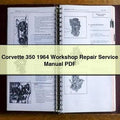
Corvette 350 1964 Workshop Repair Service Manual
Corvette / Car · PDF · Instant download
$16.99
- Instant download Link on the order page and in your inbox within a minute.
- Secure checkout Encrypted Shopify payments — card, PayPal, Apple Pay, Google Pay.
- Print-ready PDF Searchable text; print only the pages you take to the bench.
- Coverage check Not sure it fits? Send the model and VIN before you buy.
