
1
/
의
1
Audi
Audi 80 b4 Service Repair Manual 1992(GERMAN)
Audi 80 b4 Service Repair Manual 1992(GERMAN)
정가
$16.99
정가
할인가
$16.99
배송료는 결제 시 계산됩니다.
Vehicle data plateRef 310946
- Brand
- Audi
- Vehicle
- Cars
- Models covered
- 80, 80 b4
- Years
- 1992
- Format
- PDF, searchable, print-ready
- Delivery
- Instant download after checkout
- Language
- English
픽업 사용 가능 여부를 로드할 수 없습니다.
What happens after you pay
- Download link opens on the order page immediately
- The same link is emailed to you — re-download any time
- Open on phone, tablet or PC; print only the pages you need
- Not sure it covers your model year? Ask us before you buy
🏷️ Basic Information
Identification
Make:
Audi
Model:
80 B4
Year:
1992
👋 Introduction
Market Position
Target Audience:
Audi 80 B4 owners undertaking their own repairs or seeking in-depth technical knowledge, independent workshops.
Competitive Analysis
Value Proposition:
Provides factory-level repair information to save on dealership labor costs and empower owners with technical understanding. Essential for maintaining a classic vehicle like the Audi 80 B4.
Key Features
Detail Level:
Extremely detailed, step-by-step instructions and diagrams ensure clarity for complex procedures.
Comprehensiveness:
Covers virtually all aspects of the vehicle, from basic maintenance to complete mechanical and electrical system overhauls.
📋 Manual Details
Coverage Areas
Primary Coverage:
Complete Service and Repair
Secondary Coverage:
Maintenance, Diagnostics, Overhaul
Page Count
Estimated Page Count:
Extremely detailed (exact count not specified, but implies extensive content)
Manual Type
Type:
Workshop Manual / Service Manual
Language
Language:
German
Format
Format:
PDF
📖 Manual Coverage
Systems Covered
Engine:
Detailed engine overhauls, component identification, lubrication systems, cooling systems, fuel delivery.
Injection Ignition:
Comprehensive coverage of fuel injection systems (likely CIS-E or similar for the era), ignition timing, spark plug replacement, sensor diagnostics.
Clutch:
Clutch operation, adjustment, replacement, hydraulic system.
Gearbox:
Manual and automatic gearbox service, fluid changes, internal component repair, differential.
Suspension System:
Front and rear suspension components, shock absorbers, springs, bushings, alignment procedures.
Wheels:
Wheel bearing service, tire pressure recommendations, bolt patterns, wheel alignment.
Braking System:
Brake pad and disc replacement, caliper service, hydraulic system bleeding, ABS (if equipped) diagnostics.
Control Driving Instructions:
Likely refers to basic operation, driver aids, and potentially limited troubleshooting from a driver's perspective.
Air Temp Control System:
HVAC system operation, refrigerant handling (if applicable), climate control diagnostics, blower motor.
Electrical System:
Comprehensive electrical diagrams, wiring harnesses, battery, alternator, starter, lighting systems, dashboard indicators, fuse box locations.
Bodywork:
Body panel repair, door mechanisms, glass replacement, trim, structural information (likely limited).
Procedures Included
Maintenance:
Oil changes, filter replacements, spark plug service, fluid checks and top-offs, belt adjustments.
Repair:
Engine rebuilds, transmission overhaul, brake system repair, suspension component replacement, electrical component repair.
Diagnostics:
Troubleshooting guides for various systems, component testing procedures, identification of common faults.
Installation:
Component replacement and installation procedures for most major systems.
Technical Depth
Depth:
In-depth workshop level, suitable for professional mechanics and advanced DIY enthusiasts. Covers everything from routine maintenance to complete engine and transmission rebuilds.
Illustrations:
Detailed step-by-step diagrams, exploded view diagrams for component identification and reassembly.
Special Tools:
Likely specifies any special tools required for specific procedures, a hallmark of factory-level manuals.
📊 Manual Specifications
File Format
Format Type:
PDF
Searchability:
Likely searchable if created from OCR'd text, but not guaranteed without explicit mention.
Print Quality
Printability:
All pages are printable.
Binding Type
Binding:
Not applicable (digital format)
Paper Type
Paper Quality:
Not applicable (digital format)
⚙️ Engine Specifications
Primary Engine
Engine Type:
Various Inline-4 and V6 petrol engines were available for the B4 platform. Specific engine variants covered would depend on the exact manual's scope, but commonly include 2.0L (85kW), 2.0E (115hp), 2.3E (133hp) 5-cylinder, and 2.6L V6 (150hp) models.
Performance
Power Output:
Varies by engine. For instance, the 2.0E typically produced around 115 PS (113 hp; 85 kW). The 2.3E produced around 133 PS (131 hp; 98 kW). The 2.6L V6 produced around 150 PS (148 hp; 110 kW).
Torque Output:
Varies by engine. For example, the 2.0E would produce around 170 Nm (125 lb-ft), and the 2.3E around 180 Nm (133 lb-ft).
Fuel System
Injection System:
Likely utilizes Bosch K-Jetronic (CIS) or CIS-E fuel injection for most gasoline engines of this era, with variations depending on specific engine code.
Fuel Type:
Unleaded gasoline (Benzin)
Maintenance Related
Spark Plugs:
Specific part numbers and gap specifications would be detailed for each engine variant.
🔧 Transmission
Standard
Gearbox Type:
Manual transmission (5-speed is common) and Automatic transmission (e.g., 4-speed Tiptronic or similar).
Optional
Drivetrain:
Front-wheel drive (FWD) and Audi's quattro permanent all-wheel drive system.
Features
Fluid Type:
Specific transmission fluid types (e.g., G 005 200 for manual, G 052 162 for automatic) and capacities will be detailed in the manual.
📐 Dimensions
Exterior
Body Styles:
Sedan (Saloon), Avant (Wagon/Estate), and potentially Cabriolet versions of the B4 platform.
Weights
Curb Weight:
Varies significantly by model, drivetrain (FWD vs. quattro), and engine. Typically ranges from approximately 1200 kg to 1450 kg (2645 lbs to 3197 lbs).
🛡️ Safety Features
Ratings
Safety Features:
Likely includes information on seatbelt systems, potential airbag deployment (driver-side likely standard or optional), crumple zones. ABS was often optional or standard on higher trims/engines.
Active Features
Braking Assistance:
Anti-lock Braking System (ABS) details and diagnostics are covered if equipped.
💡 Technology Features
Infotainment
Audio System:
Factory-fitted radios, cassette players, and CD changers (optional). Speaker systems varied by trim level.
Driver Assistance
ABS System:
Details on operation and troubleshooting for the Anti-lock Braking System (if equipped).
Connectivity
Lighting System:
Information on headlamps, taillamps, interior lighting, and bulb replacement procedures.
🔧 Maintenance
Service Intervals
Oil Change Interval:
Typically around 10,000-15,000 km (6,000-9,000 miles) or annually, depending on driving conditions and specific engine oil used. The manual will detail the exact interval.
Timing Belt:
Critical for many Audi engines of this era. Replacement intervals usually around 60,000-90,000 km (37,000-56,000 miles). Failure can cause catastrophic engine damage.
Fluid Specifications
Engine Oil:
Viscosity grades like 5W-40 or 10W-40 are common. Specific VW/Audi specifications (e.g., VW 500.00, VW 502.00) will be detailed in the manual.
Coolant:
Ethylene glycol-based coolant, typically G11 specification (blue or green) or G12 (pink), mixed with distilled water. Capacities vary by engine.
Known Issues
Common Problems:
Potential issues can include aging electrical components (corrosion in connectors, failing relays), coolant leaks from hoses or radiators, worn suspension bushings, fuel distributor issues (on CIS-E systems), and ABS sensor failures.
📚 Vehicle History
Brand Heritage
Audi Legacy:
The Audi 80 B4 represents a significant evolution in Audi's design language and engineering, building upon the success of its predecessors. It laid the groundwork for future Audi models.
Model Evolution
B4 Introduction:
The B4 generation was introduced in late 1991 for the 1992 model year, replacing the B3. It featured a more modern design, improved safety, and enhanced chassis dynamics.
Production
Production Period:
The B4 generation was produced from 1991 to 1995.
🏆 Awards & Recognition
Recognitions
Market Reception:
While specific awards for the 1992 model year might be scarce, the Audi 80/90 series was generally well-regarded for its build quality, comfort, and sophisticated engineering for its time. It competed well against established German rivals.
Delivery & file format
Delivery & file format
This is a digital PDF download, not a printed book. After payment the download link appears on your order confirmation page and is emailed to the address you entered. Files open in any PDF reader on phone, tablet or computer and can be printed.
Check the model year and engine before you buy
Check the model year and engine before you buy
Manufacturers change procedures, wiring and part numbers between model years and engine options. If your VIN plate shows a year or engine code that is not listed on the data plate above, contact us with the model, year and VIN and we will confirm coverage before you order.
Share

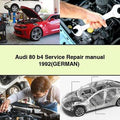
Audi 80 b4 Service Repair Manual 1992(GERMAN)
Audi / Car · PDF · Instant download
$16.99
- Instant download Link on the order page and in your inbox within a minute.
- Secure checkout Encrypted Shopify payments — card, PayPal, Apple Pay, Google Pay.
- Print-ready PDF Searchable text; print only the pages you take to the bench.
- Coverage check Not sure it fits? Send the model and VIN before you buy.
