
1
/
の
1
Harley-davidson
HD DUO GLIDE 74 OHV Motorcycle Workshop Manual
HD DUO GLIDE 74 OHV Motorcycle Workshop Manual
通常価格
$16.99
通常価格
セール価格
$16.99
配送料はチェックアウト時に計算されます。
Vehicle data plateRef 569677
- Brand
- Harley-davidson
- Vehicle
- Motorcycle
- Models covered
- FL Models, Harley Davidson, HD DUO GLIDE 74 OHV, Motorcycles
- Format
- PDF, searchable, print-ready
- Delivery
- Instant download after checkout
- Language
- English
受取状況を読み込めませんでした
What happens after you pay
- Download link opens on the order page immediately
- The same link is emailed to you — re-download any time
- Open on phone, tablet or PC; print only the pages you need
- Not sure it covers your model year? Ask us before you buy
🏷️ Basic Information
Identification
Make:
Harley-Davidson
Model:
Duo-Glide
Engine Configuration:
OHV V-Twin
Engine Displacement Code:
74
Part Number:
99482-59
👋 Introduction
Market Position
Target Audience:
Owners and mechanics specializing in vintage Harley-Davidson motorcycles, particularly the Panhead and Shovelhead era (though primarily Panhead for the '59 model).
Competitive Analysis
Value Proposition:
Provides essential, manufacturer-specific technical data for maintaining and repairing a highly sought-after classic motorcycle, bridging the gap for owners who need reliable information.
Key Features
Illustration Detail:
Emphasis on detailed, fully illustrated content ensures visual guidance for complex procedures.
Model Specificity:
Highly specific to the 74 OHV Duo-Glide, ensuring accuracy for the intended models.
📋 Manual Details
Coverage
Applicable Models Primary:
1959 Harley-Davidson Duo-Glide 74 OHV
Applicable Models Secondary:
1958 Harley-Davidson Duo-Glide 74 OHV (with minor differences)
Applicable Models General:
Earlier 1961-1974 OHV Harley-Davidson Models
Page Count
Total Pages:
140
Manual Type
Type:
Workshop Manual / Repair Manual / Service Manual
Language
Language:
English
Format
Format:
Downloadable
📖 Manual Coverage
Systems Covered
Engine:
Comprehensive coverage of the 74 OHV V-Twin engine, including disassembly, assembly, tuning, and troubleshooting.
Chassis:
Detailed information on frame, suspension (front fork and rear shocks), steering, and wheels.
Transmission:
In-depth coverage of the gearbox, clutch, and final drive components.
Electrical:
Extensive details on the ignition system, lighting, charging system (generator/regulator), and wiring diagrams.
Miscellaneous:
Coverage of braking systems, fuel system (carburetor, fuel tank, lines), exhaust system, and bodywork/trim.
Procedures Included
Maintenance:
Routine maintenance tasks, lubrication, adjustments, and fluid changes.
Repair:
Step-by-step repair instructions for various components and systems.
Troubleshooting:
Diagnostic guides and common issue resolutions for engine, electrical, and mechanical problems.
Rebuilds:
Complete disassembly and reassembly procedures for major components like the engine and transmission.
Technical Depth
Depth:
Comprehensive, from basic adjustments to full engine and transmission overhauls, suitable for both amateur mechanics and professional technicians.
Illustrations:
Fully illustrated with detailed diagrams and exploded views for clarity.
📊 Manual Specifications
File Format
Digital Format:
Likely a PDF or similar digital document, optimized for download.
Print Quality
Clarity:
Implied high quality due to 'fully illustrated' detail, suitable for printing or digital viewing.
Binding Type
Binding:
N/A (Downloadable Format)
Paper Type
Paper:
N/A (Downloadable Format)
Coverage Areas
Covered Sections Overview:
Product (general overview), Chassis, Engine, Transmission, Electrical, Miscellaneous.
⚙️ Engine Specifications
Primary Engine
Engine Type:
Overhead Valve (OHV) V-Twin
Engine Displacement:
74 cubic inches (approximately 1213 cc). This typically refers to the Panhead engine of this era (EL, FL, FLH series).
Bore Stroke Estimate:
Likely 3.4375 inches bore x 4.25 inches stroke for the 74 cubic inch Panhead.
Performance
Horsepower Estimate:
Approximately 50-55 HP (varies by tune and specific model variant FL vs FLH).
Torque Estimate:
Estimated around 70-80 ft-lbs, with peak torque typically available at lower RPMs.
Fuel System
Carburetor Type:
Typically a Linkert M74B or M74G carburetor, or early Keihin offerings.
Fuel Type:
Leaded gasoline (prior to unleaded transition), typically 86-89 octane rating.
Ignition System
Ignition Type:
Contact breaker points ignition with a coil and distributor (or magneto on some earlier or specialized models).
Cooling System
Cooling Method:
Air-cooled
🔧 Transmission
Standard
Transmission Type:
4-speed constant mesh manual transmission.
Optional
Optional Transmissions:
N/A for this specific model year and engine configuration; 4-speed was standard.
Features
Clutch Type:
Dry multi-plate clutch.
Gear Ratios:
Specific gear ratios will be detailed within the manual for each of the 4 speeds.
Transmission Fluid:
Typically SAE 50 or SAE 60 straight-weight gear oil.
📐 Dimensions
Exterior
Wheelbase Estimate:
Approximately 59-61 inches, depending on specific model variant.
Weights
Dry Weight Estimate:
Around 550-600 lbs, depending on equipment and accessories.
Gross Vehicle Weight Rating Estimate:
N/A specific GVWR, but designed for rider and passenger load.
🛡️ Safety Features
Ratings
Safety Standards:
No formal modern safety ratings (e.g., NHTSA, Euro NCAP) apply to this era of motorcycle. Safety features are mechanical.
Active Features
Brakes:
Drum brakes front and rear. Specifications for brake shoe lining, drum tolerances, and adjustment procedures will be in the manual.
Suspension:
Telescopic front fork (likely hydraulic damped) and rear swingarm with dual shock absorbers. Manual will detail maintenance and rebuilds.
Passive Features
Lighting:
Headlight, taillight, brake light, turn signals (depending on market and optional equipment). Manual covers bulb types and wiring.
💡 Technology Features
Infotainment
Infotainment Systems:
N/A. This era of motorcycle predates modern infotainment systems. Features are mechanical and electrical.
Driver Assistance
Assistance Features:
N/A. No electronic driver assistance features.
Connectivity
Connectivity Features:
N/A. Primarily mechanical and basic electrical systems.
🔧 Maintenance
Service Intervals
Oil Change Interval:
Typically every 1,000-2,000 miles, or at least annually. Manual will specify exact intervals and procedures.
Tune Up Interval:
Recommended every 2,000-3,000 miles, including ignition timing, carburetor adjustment, and valve lash checks.
Fluid Specifications
Engine Oil Type:
Commonly recommended: Harley-Davidson genuine oil, Shell Rotella T 30 or 40 (non-synthetic) or similar heavy-duty straight-weight oils. Manual will confirm specific API service classification.
Primary Chain Case Oil:
Typically a heavier gear oil (e.g., SAE 75W-90 or 80W-90) or specific primary lubricant. Manual will detail capacity and type.
Transmission Oil:
SAE 50 or SAE 60 straight-weight gear oil. Manual will provide exact viscosity and capacity.
Fork Oil Type:
Specific weight hydraulic fork oil, likely around 10W or 20W. Manual will specify viscosity and capacity per fork leg.
Known Issues
Panhead Common Issues:
Oil leaks (particularly from pushrod tubes, rocker boxes, and crankcase seals), valve guide wear, generator charging system issues, and carburetor adjustment sensitivity.
Transmission Challenges:
Shift drum detent spring wear leading to false neutrals, clutch adjustment requiring precision.
Electrical Quirks:
Vintage electrical systems can be prone to corrosion, loose connections, and charging system failures (generator, regulator). Manual is critical for troubleshooting.
📚 Vehicle History
Brand Heritage
Brand Legacy:
Harley-Davidson, established in 1903, is synonymous with American motorcycling, known for its V-twin engines and iconic styling.
Model Evolution
Duo Glide Lineage:
The Duo-Glide evolved from the Hydra-Glide (with hydraulic front forks) and was a precursor to the Electra Glide. The '59 model is part of the Panhead era (1948-1965), transitioning towards larger engines and more touring-oriented features.
Production
Production Era:
1958-1964 for the Duo-Glide designation. The 74 OHV engine was standard across these years for FLH models.
Engine Production:
The Panhead engine (61 cubic inch 'F' and 74 cubic inch 'FL') was produced from 1948 to 1965. The 74 OHV is the larger displacement version.
🏆 Awards & Recognition
Recognitions
Vintage Motorcycle Status:
While specific awards are unlikely for a service manual, the 1959 Duo-Glide is a highly regarded classic motorcycle, prized by collectors and enthusiasts for its historical significance and iconic Harley-Davidson character.
Ratings
Manual Rating Implication:
The availability of a detailed workshop manual like this is crucial for maintaining the value and operational integrity of a vintage motorcycle, effectively 'certifying' its serviceability.
Delivery & file format
Delivery & file format
This is a digital PDF download, not a printed book. After payment the download link appears on your order confirmation page and is emailed to the address you entered. Files open in any PDF reader on phone, tablet or computer and can be printed.
Check the model year and engine before you buy
Check the model year and engine before you buy
Manufacturers change procedures, wiring and part numbers between model years and engine options. If your VIN plate shows a year or engine code that is not listed on the data plate above, contact us with the model, year and VIN and we will confirm coverage before you order.
Share
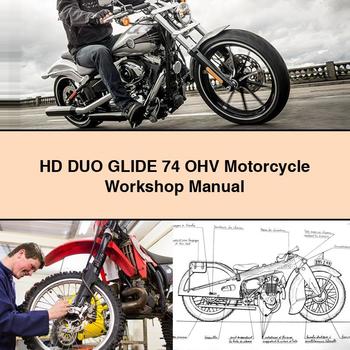

HD DUO GLIDE 74 OHV Motorcycle Workshop Manual
Harley-davidson / Motorcycle · PDF · Instant download
$16.99
- Instant download Link on the order page and in your inbox within a minute.
- Secure checkout Encrypted Shopify payments — card, PayPal, Apple Pay, Google Pay.
- Print-ready PDF Searchable text; print only the pages you take to the bench.
- Coverage check Not sure it fits? Send the model and VIN before you buy.
